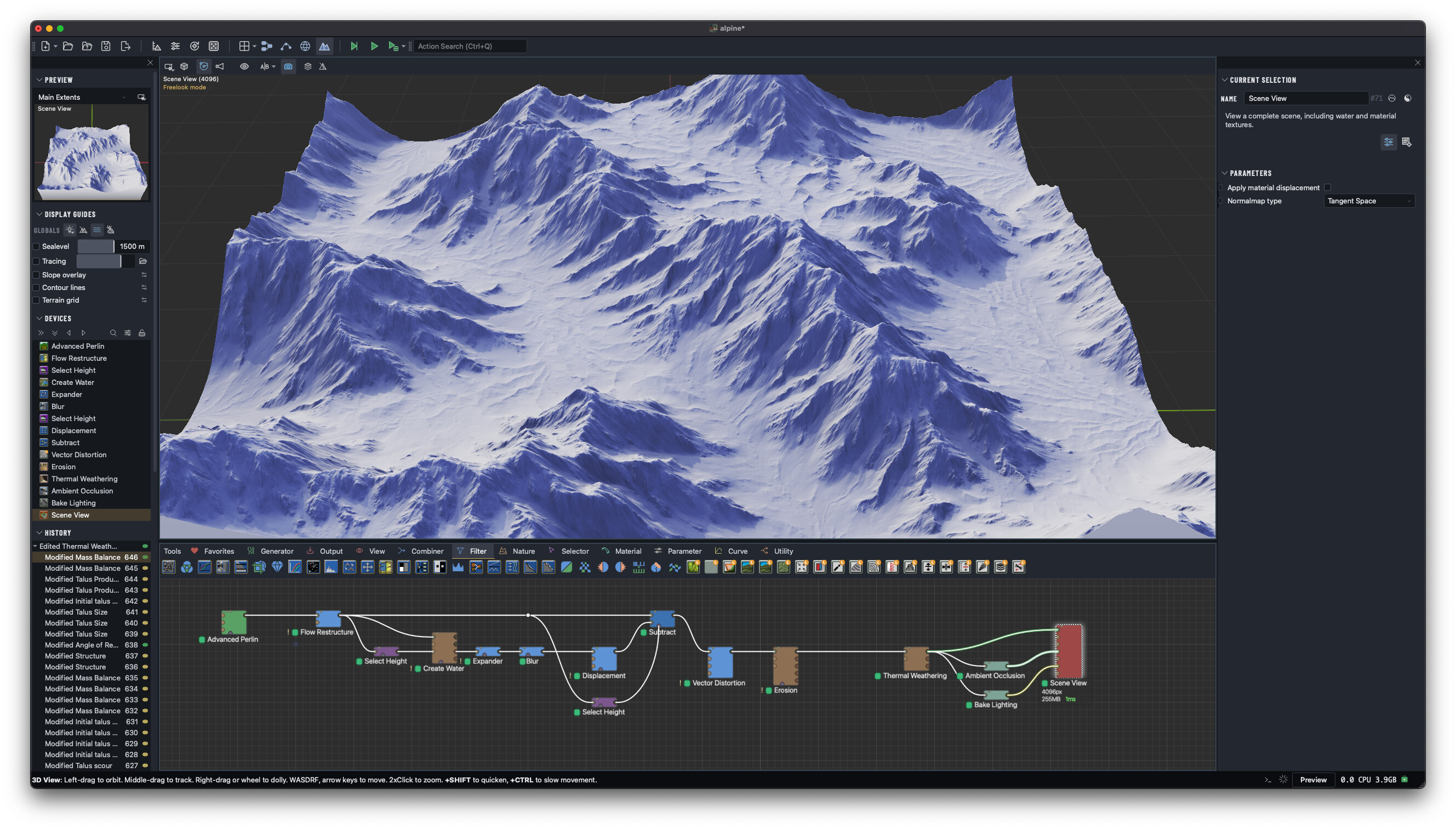
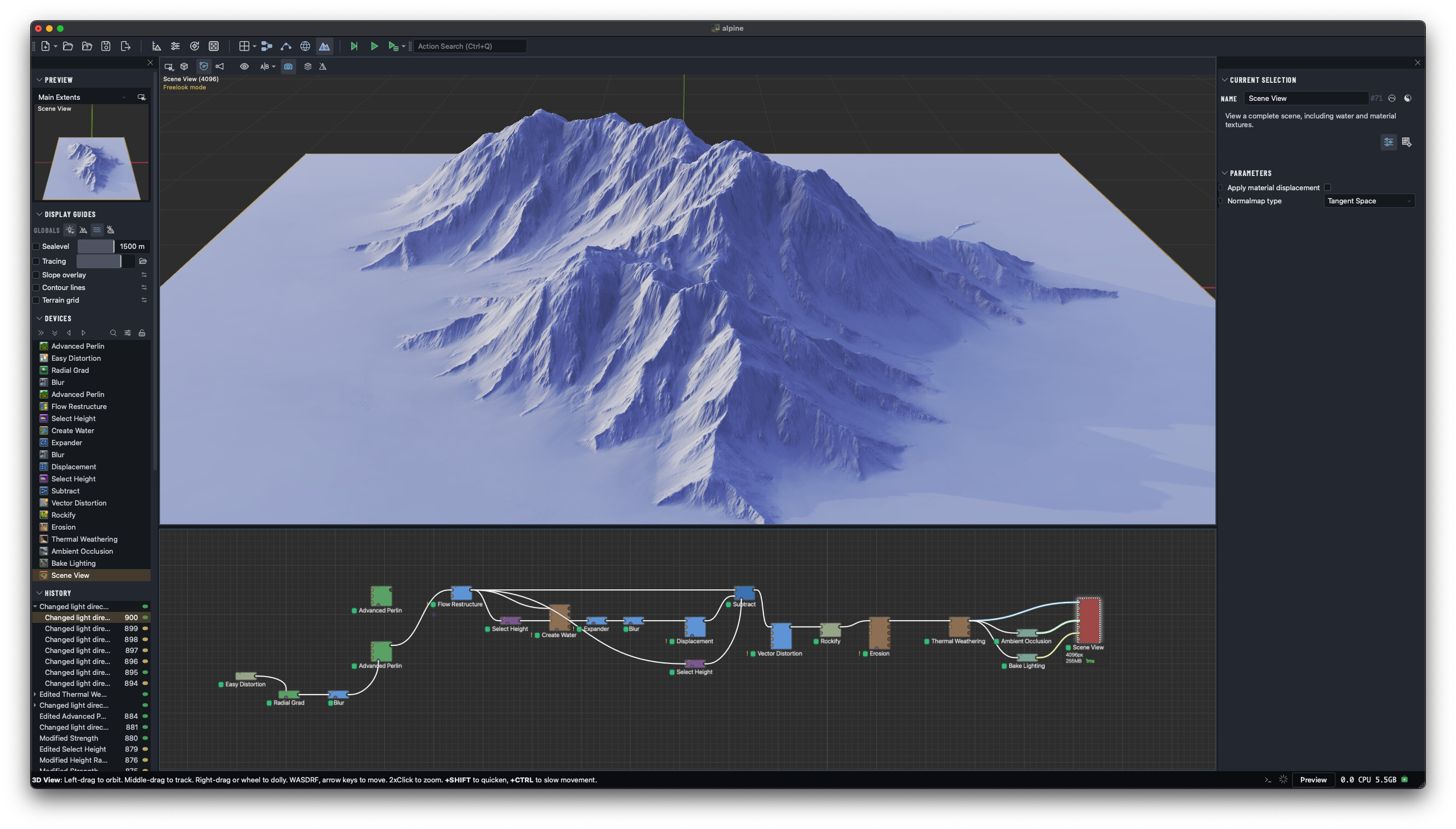
I’m currently working on this rocky, deeply channeled terrain. I want to be able to ultimately export/extract a few continuous ranges as well as some standalone peaks. I’ve been kind of fumbling my way to this result after following some forum post workflows. What I’m struggling with now is ‘isolating’ a range by having it fall off or clamp down to the ground level on the outside of the extents (like the range in the middle of the screenshot below)
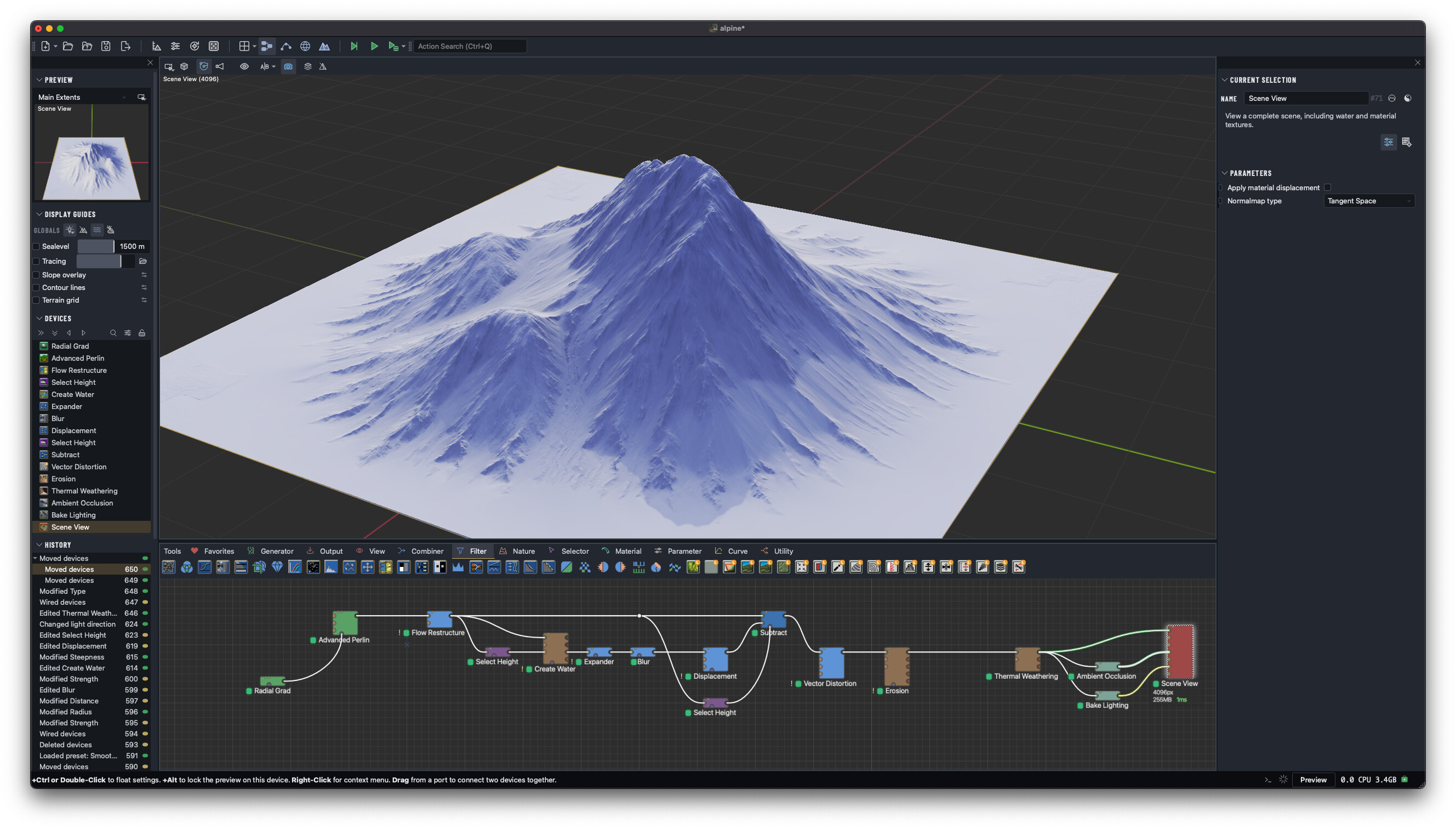
When I try to use a radial gradient or shapes as mask input for the perlin noise, it changes the terrain significantly and produces a symmetric cone like shape instead of separating the range from the other terrain forms like below:
If I understand what you’re looking for, I think this is actually not the problem of the mask per se, but the relative featuresize between the mask and the noise generator.
If you posted an image of what the beginning advanced perlin produces, it might help.
Basically, what kind of effect a mask has depends strongly on the relative feature scales of the two maps. This is also true with distortion btw.
If the feature scale of the mountain noise is greater than or nearly equal to the feature scale of the mask, the features of the terrain mostly disappear and all you see is the mask. I think that’s what’s happening in your second image. If the feature scale of the mountain noise is significantly less, then its almost the same-but-different situation – Things look OK at a small scale, but zooming out you very clearly see the mask.
I’ve found that ratios between 0.25 and 1 usually are pretty pleasing in terms of blending the two into a harmonious whole. So concretely, I would guess that in the second image above, reducing the feature scale of the perlin noise, or increasing the scale of the radial gradient, would help.
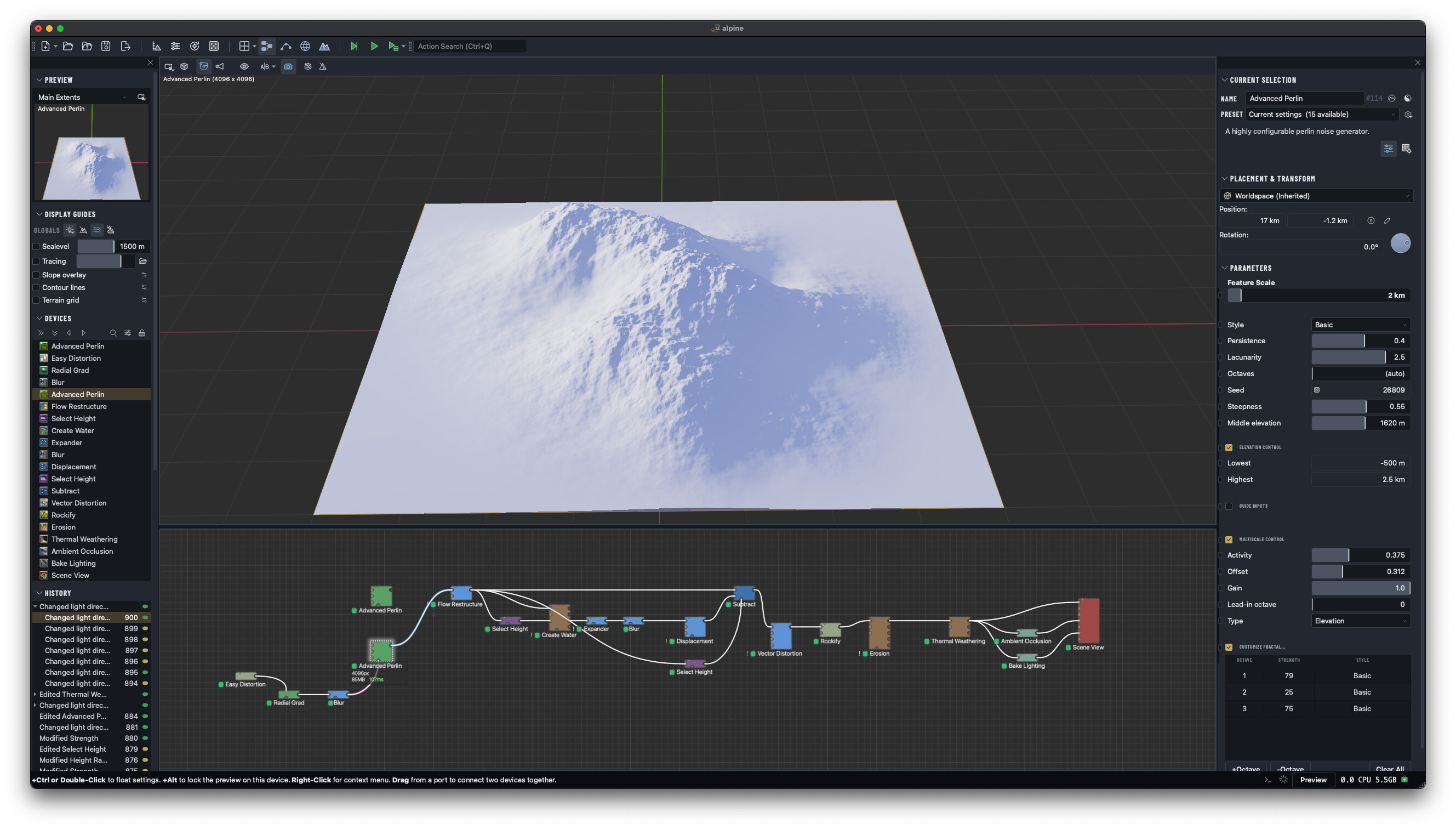
Thanks for the explanation! I think I’m beginning to understand the relationship. I was able to achieve something close to what I’m going for by sticking to your ratio. Documenting the process in case anyone else may benefit.
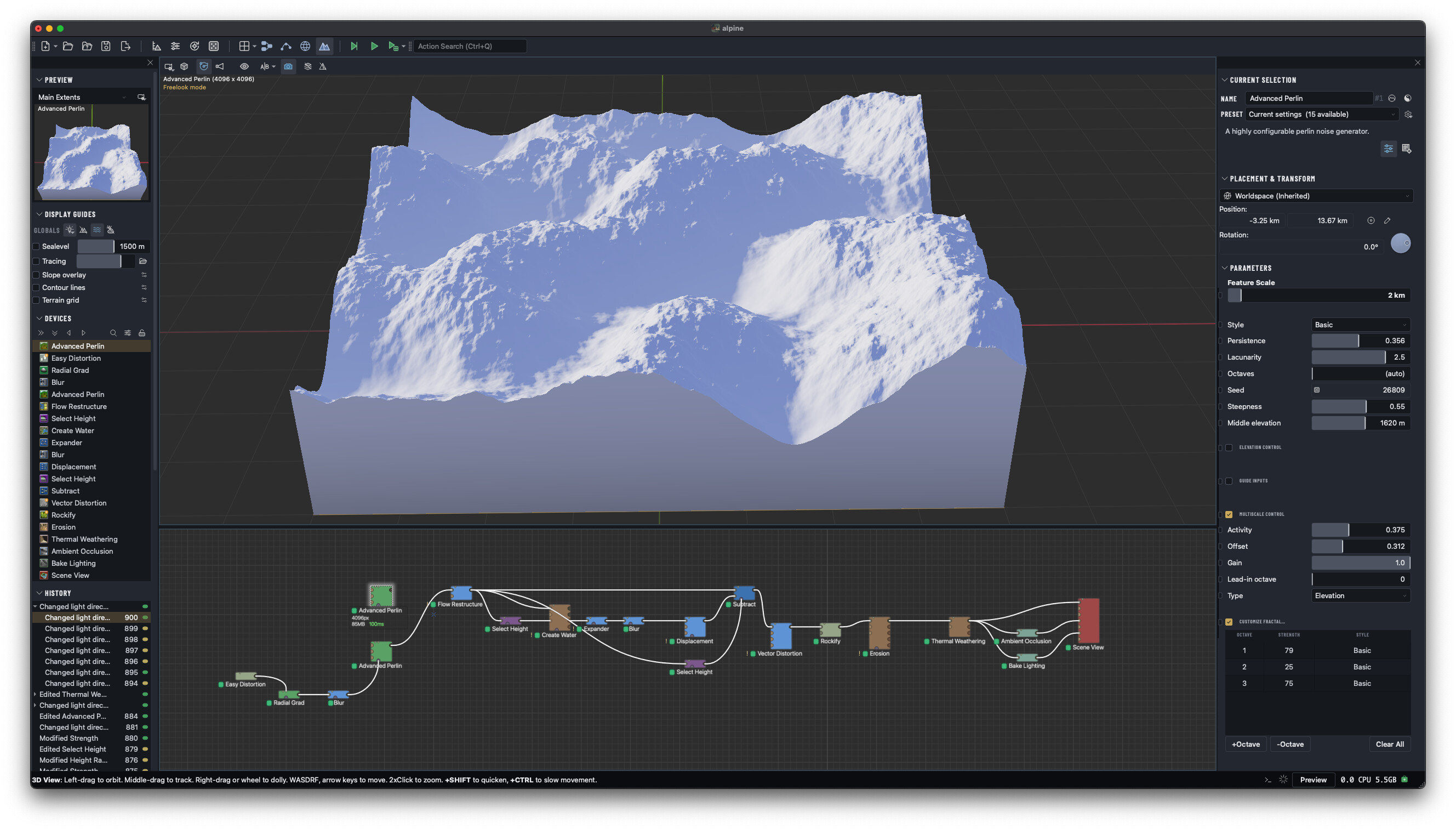
What I did was applied elevation control to the perlin to bring it down closer to the floor, and supplied a distorted, blurred square radial gradient to get a bit of an irregular mask shape instead of a perfect radial. The original perlin looked like this: